A Ship of Fools
Christopher Nolan's version of the Homeric epic presents itself in trailers as a high-budget, gritty retelling. But is The Odyssey taking itself too seriously?

It’s a funny trick of osmosis how most people pick up their knowledge of history’s iconic stories. By the time a person reaches adulthood, there’s a good chance – at least if they were paying attention in English class – that they will have a passing familiarity with heroes like Gilgamesh, Beowulf, and King Arthur as well as be equipped with the knowledge that vaunted authors like Chaucer, Melville, and Tolkien once existed and produced groundbreaking epics in their own right. These are all names that have lasted through time and carry with them a sense of great importance. But for someone to pick up these heroes or authors organically, without being induced by a cultural point of reference, is an exceedingly rare thing.
When approaching the most popular stories in history, whether The Iliad or Star Wars, people tend to absorb these tales first through that frame of cultural reference, often in comedy but also present in the form of homage in drama. With references arrives the curiosity for context they trigger along with the understanding that these epics have longstanding relevance to humanity. Whether through being relatable or through representing a common aspiration, people have been enamored by some of these stories for thousands of years. And that adoration and respect for these tales teaches us their impact and their frame long before we ever read or hear them for ourselves.
This is all to say that my first experience with Homer and The Odyssey was through Wishbone. As in the show with the Jack Russell Terrier.
One of the quirks of my upbringing and my parents’ foresight in getting educational content in front of me is that I was predisposed to being interested in Greek Mythology from a very young age. In particular, the genius purchasing decision of my mother in acquiring the cassettes of D’aulaires’ Book of Greek Myths cemented that fascination with the classics early. To this day, I can recall evocative memories of car rides transformed into story time with Paul Newman, Sidney Poitier, Kathleen Turner, and Matthew Broderick. If I close my eyes and focus, I can still hear Paul Newman saying, “Midas has ass’ ears!” clear as a bell.
So when PBS’ Wishbone decided to tackle the Greek Myths with their episode Homer Sweet Homer (which I am convinced must also be the name of an episode of The Simpsons), elementary school me was all in. The bits that have stuck with me involved Wishbone, playing our hero Odysseus, working with Hermes and Poseidon to escape Calypso’s lair and returning home to Ithaca, then besting his wife Penelope’s many suitors in a contest of archery prowess. PBS did not follow this up with a scene of Telemachus and a Jack Russell Terrier killing Eurymachus and the other suitors, which would have been a bold choice for a children’s program. I believe there was a food fight instead.
Even as a kid, it all struck me as very silly. A fun watch, but even by the show’s standard, silly. It’s also the episode of Wishbone I can most easily recall. I have come to suspect that is at least in part due to the fact that The Odyssey is, as an epic, a bit silly.
There is a tendency I have noticed anecdotally with respect to epics that I find fascinating. There exists a presumption that epics, especially the oldest ones, must themselves be serious, sober works in order to have survived through time, an attitude in step with the dry reading provided by the philosophical writings of the Ancient Era. When you take a closer look at epics throughout history, the inverse position becomes readily apparent. These epics survive in part because some of their most memorable chapters are unhinged. It’s a comfort in a way to know that Gilgamesh is full of sex scenes, that Beowulf is Old English Kung Fu, and that The Canterbury Tales include some positively demented filth. No matter how much time separates us from the original audiences these stories were intended for, people haven’t changed all that much, nor have the stories of sex, violence, and tomfoolery we gravitate towards.
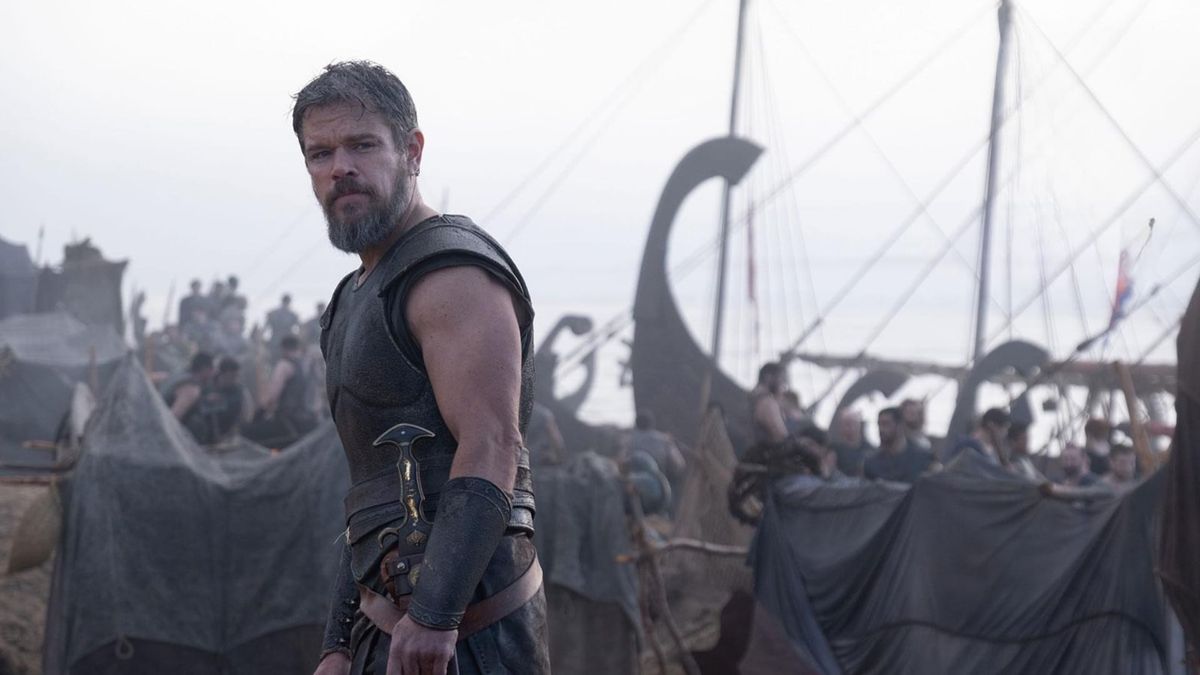
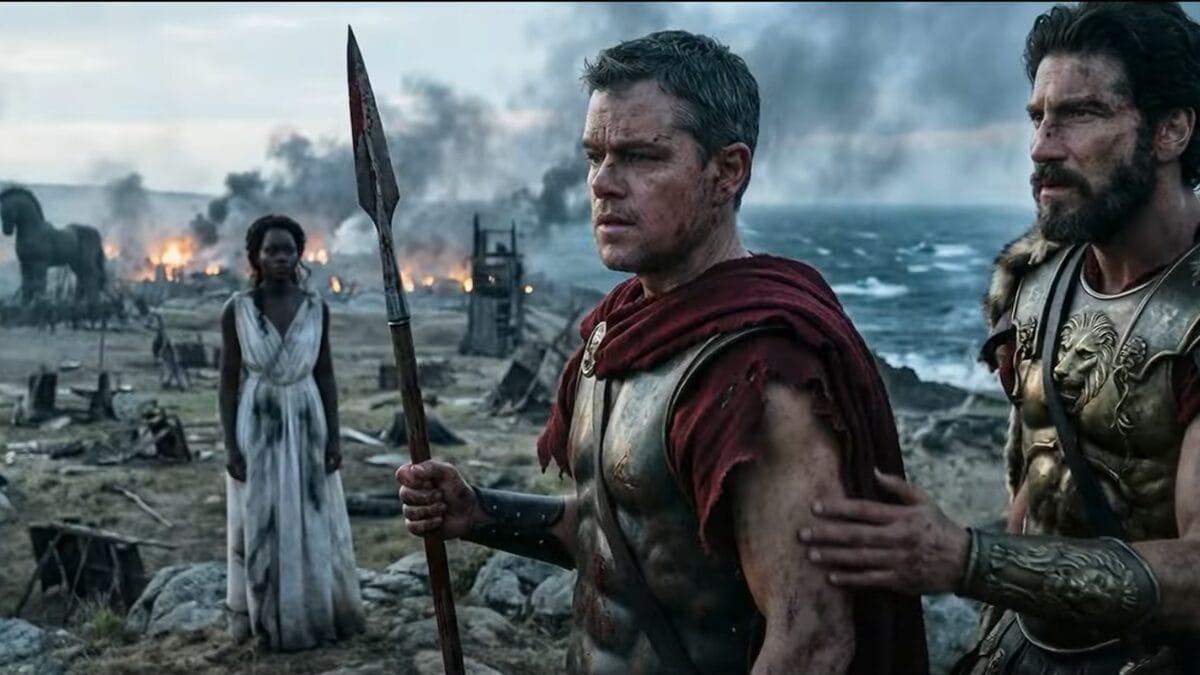
I think it is this point that I found myself stuck on when I finally took time to watch the most recent trailer for Christopher Nolan’s upcoming adaptation of The Odyssey. The trailer offers all the hallmarks that we’ve come to expect from a big-budget Nolan film since he first put his particular lens for the craft of epic production on display with Batman Begins. In this respect, we are reminded by the trailer that Nolan is a master at this. We get exquisite, sweeping wide shots adorned with the best production design possible; palpable personal tensions between characters that drive the drama underneath the spectacle; men pumping each other up and charging into the fray, usually yelling.
And it all comes across a bit… serious.
I should preface what follows by first acknowledging that a trailer is not only a poor representation of the sum of a film, but also an entirely different form of filmmaking aimed specifically at getting the viewer hyped up for an upcoming release. That being said, the point it left me wondering when the dust settled was a simple one to express, but a difficult one to answer: is this adaptation of The Odyssey taking itself seriously? There is no doubt in my mind that the film will be exceptionally crafted technically, nor is there a doubt in my mind that the cast will have given their all to realize the narrative and the sensibilities Nolan has set before them. What I found myself doubting upon viewing the trailer is the frame itself.
Granted, there is absolutely a market in the viewing public for a Christopher Nolan film irrespective of the content of that film, yet something about the trailer appears to have struck people as hollow. While this could just be a marketing misfire, the trailer has set off discussion among film nerds and casual moviegoers alike over the overall tone of what has been presented to the audience. It isn’t clicking the way a studio would want a summer tentpole to resonate. And I would submit that this is at least partially down to the cultural references people actually have for The Odyssey thanks to adaptations of the work filmmakers have produced over the history of the art form. Disproportionately, the most beloved cinematic takes on Homer’s epic have come from the world of comedy. And I am not just talking about Wishbone.
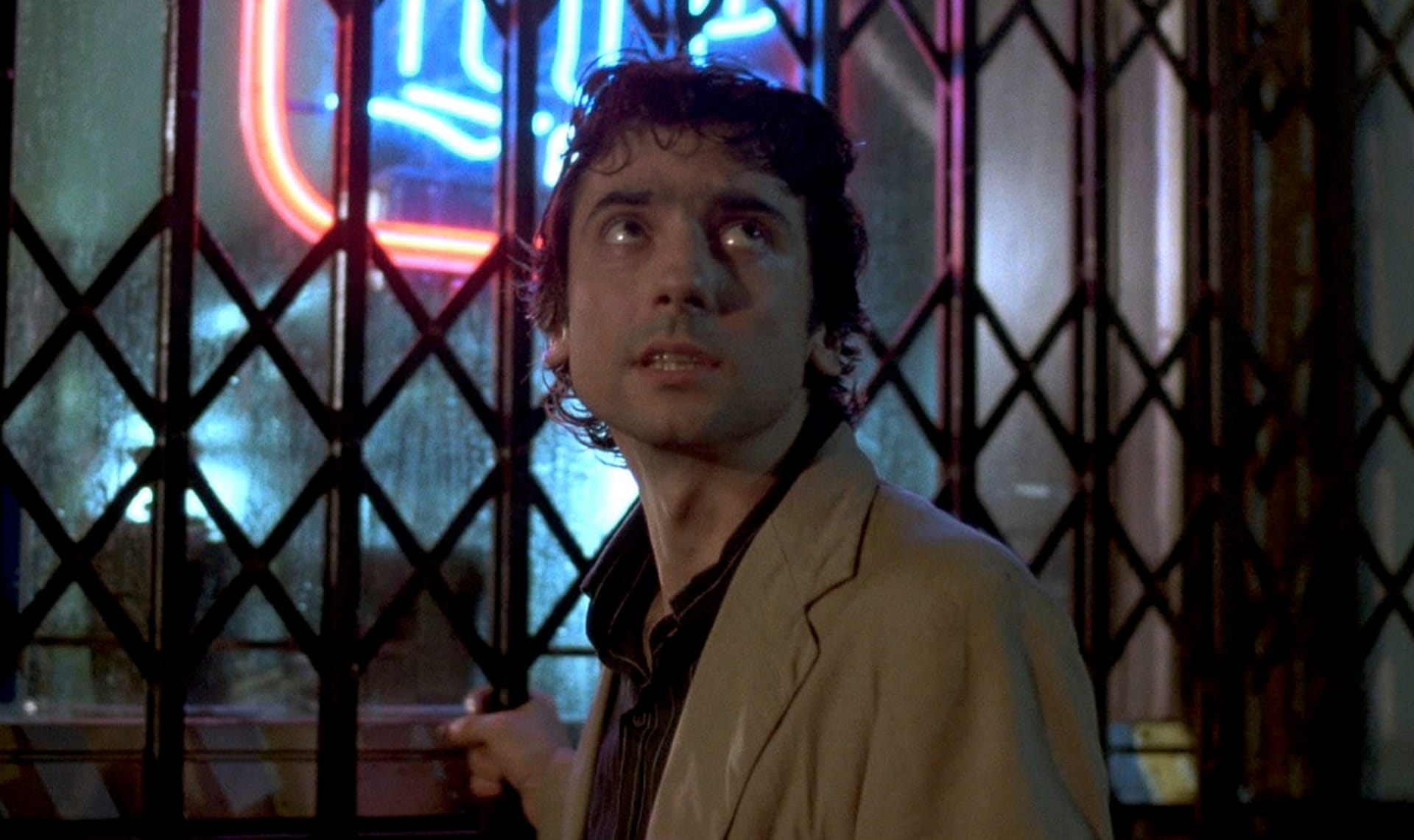
Consider Martin Scorsese’s rendition of Homer’s story, the severely under-discussed 1985 comedy After Hours. Our Odysseus, Paul Hackett – portrayed flawlessly by Griffin Dunne – finds himself out all night in the SoHo neighborhood of Manhattan and desperately incapable of getting home, all while becoming involved in an increasing series of unfortunate coincidences, miscommunications, and poor decisions. Scorsese posits a comedic perspective of Odysseus not as a man perpetually caught off guard by hubris but instead as a hapless pencil pusher. Dunne’s performance as he literally runs from one encounter to another pits him against the evening itself, the night churning him about Lower Manhattan like Poseidon playing with the Winds. The experience makes for arguably Scorsese’s strongest comedy and a film that felt familiar to the roots of his style in how it let the personal propel the spectacle, only with gags instead of gangsters.
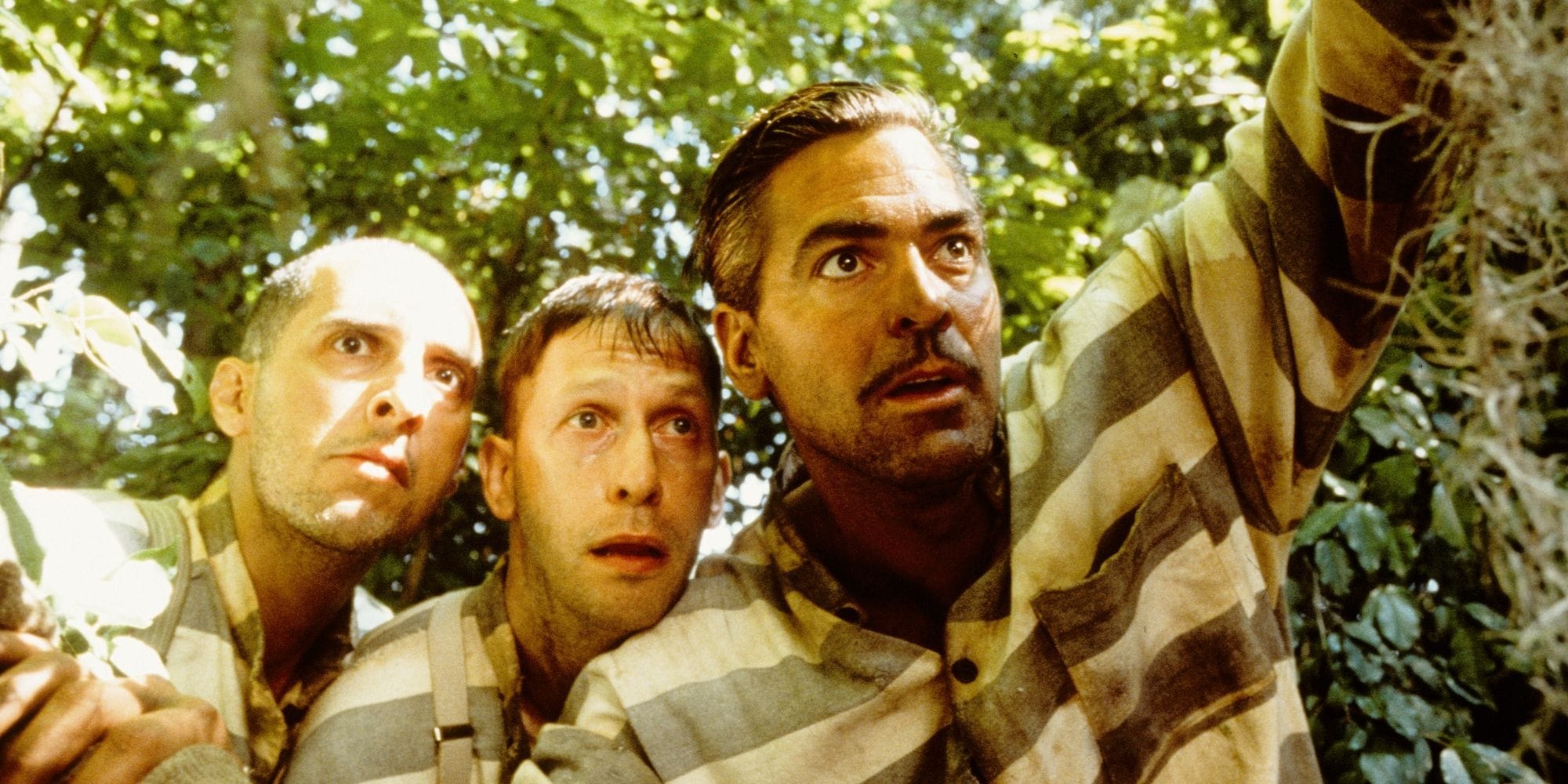
While After Hours remains somewhat of a hidden gem in Scorsese’s library of work, audiences at large are much more familiar with the Coen Brothers’ fantastical take on Homer, O Brother, Where Art Thou? In their version of The Odyssey, the narrative strikes a relatively faithful parallel in its telling of the story despite transposing it upon the American South of 1937. The humor particularly capitalizes upon how the Coens’ Odysseus (George Clooney) functions most often as a detriment to his loyal crew (John Tutrurro and Tim Blake Nelson) through increasingly half-brained acts of hubris. The trio’s lamb from the law further compels the humor forward through letting the crew experience the various absurdities of the original tale at full force, both comedic and cruel. Moreover, the edit condenses the story in the film’s first half more into a series of vignettes as opposed to a focused narrative, an example of filmmakers being daring enough to address The Odyssey’s often aimless and episodic early books by letting character and spectacle draw the audience in. For a film under two hours, O Brother, Where Art Thou? does a sensational job of taking viewers on a fulsome journey through the epic by reveling in the ridiculous.
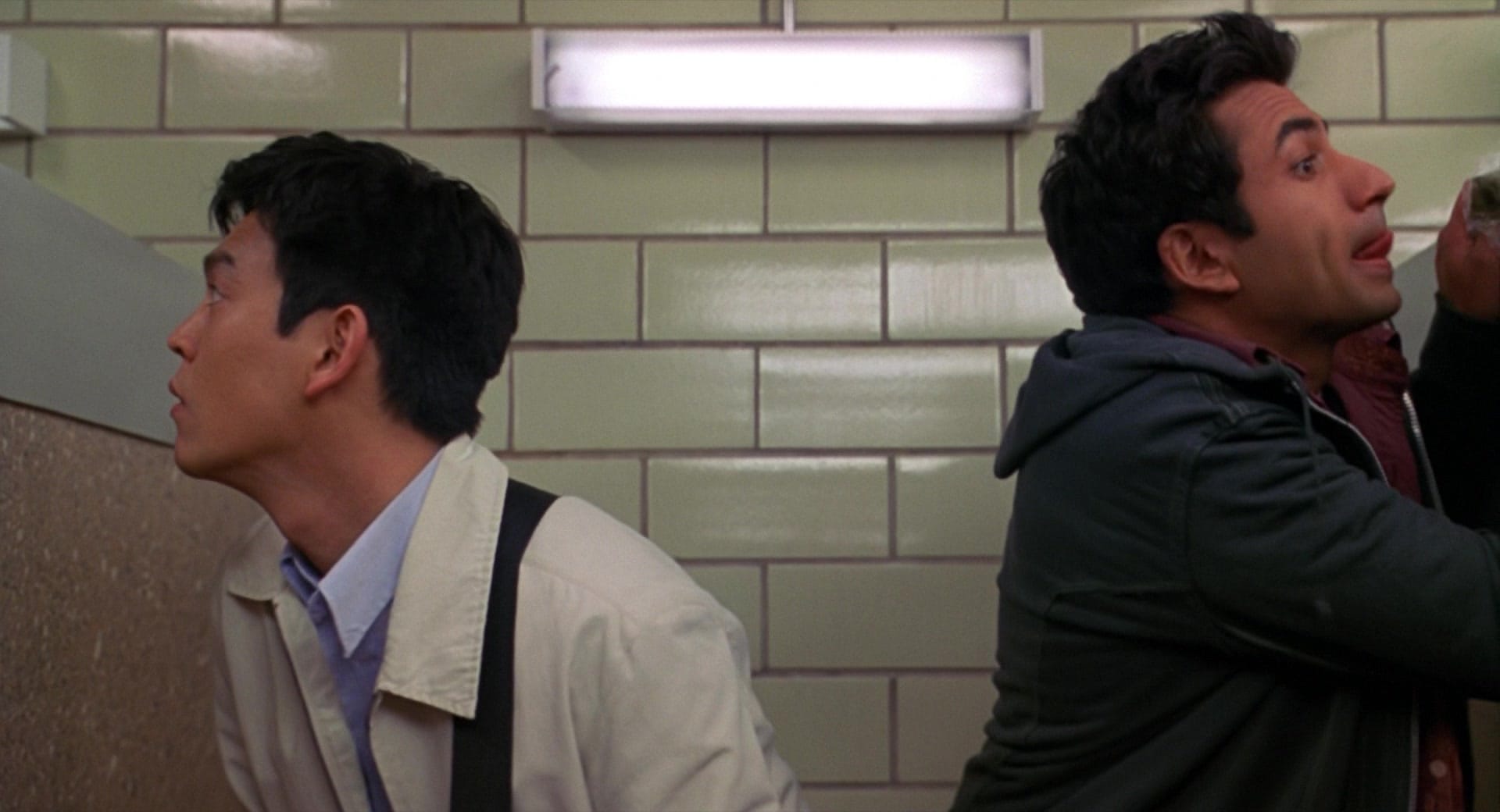
For all its unadulterated nonsense, O Brother Where Art Thou? is not even the most outlandish Odyssey adaptation of the 21st century. That honor almost certainly belongs to Danny Leiner’s Harold and Kumar Go to White Castle. While the film does a very convincing job of dressing itself up as an unhinged, raunchy buddy comedy in the prevailing popular comedic style of the early 2000s, what is buried underneath is a remarkably intelligent adaptation of Odysseus’ journey. What Harold and Kumar excels at in comparison to other adaptations is the absolute haphazard nature of how the journey plays out. Our heroes have the vaguest of paths set before them, but with every gag comes a sinking realization that the punchline is going to move the two further and further from the restaurant of their dreams. Like Odysseus completely missing Ithaca and landing in Algeria, there’s no telling where Harold and Kumar will wind up after they get a cheetah high and attempt to ride it to their goal. The total embrace of randomness emboldens what could have fallen flat as a series of edgy setpieces and gives it the perfect backbone. Is it faithful to the original story? Surely the presence of the cheetah answers that question. But where Harold and Kumar Go to White Castle does keep its faith is the ethos of the tale, and one could argue that’s all that matters when it comes to a story that was passed down by word-of-mouth.
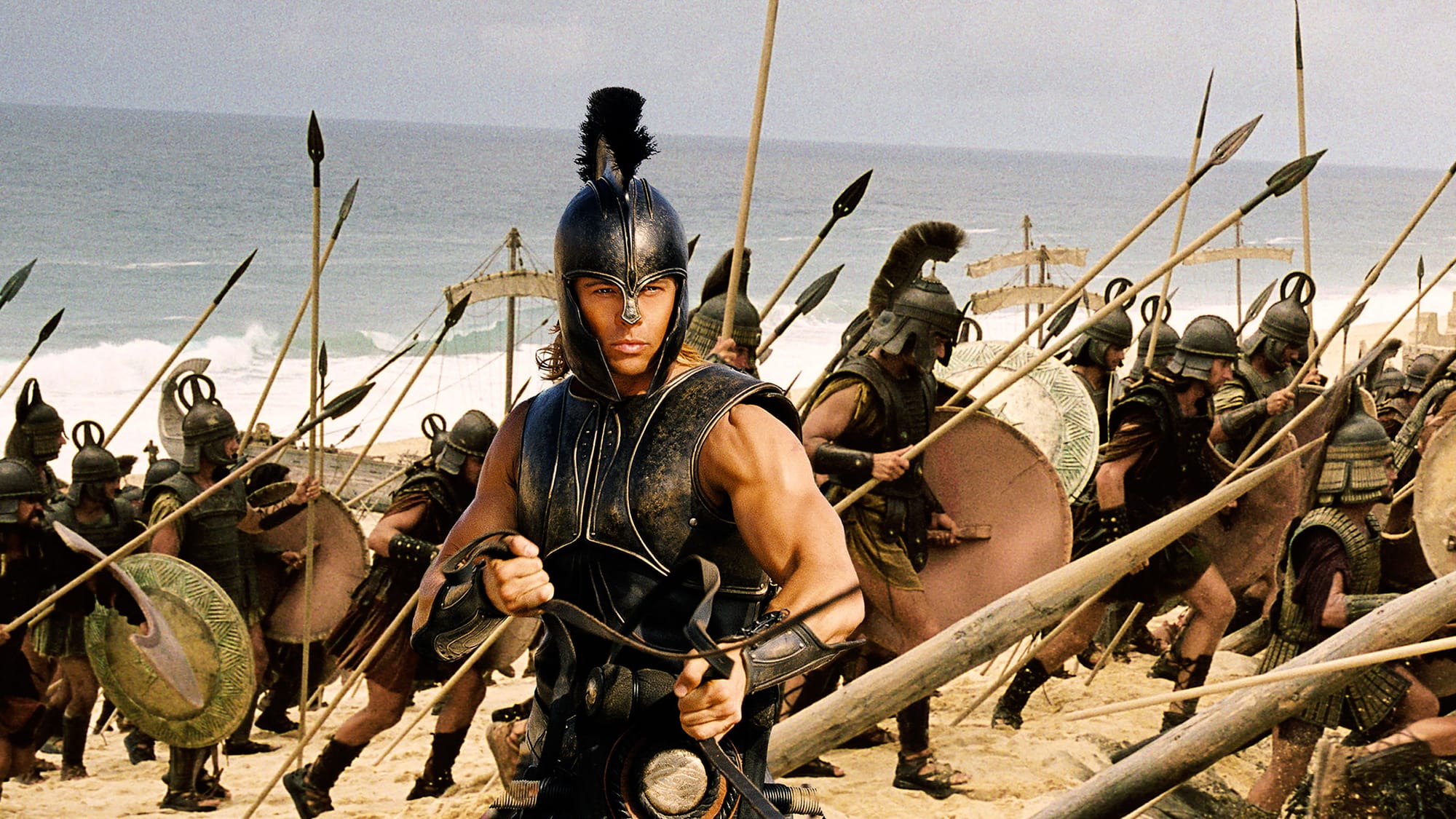
If a person is willing to accept The Odyssey as comedy – or at the very least as deliberately a bit silly – the question for Christopher Nolan’s upcoming adaptation is how he leans into that grounding. One possibility – and the one I am most hopeful for – is that Nolan, being a strong study of film history, takes a leaf out of Wolfgang Petersen’s approach to Troy. The 2004 action epic shares a lot of connective tissue with the impending adaptation of The Odyssey in the sense that it was greatly hyped as a serious, sober epic in its lead-up, only to be met with critical frustration upon its release for how over-the-top Hollywood and tongue-in-cheek it came across instead of the becoming next Lawrence of Arabia. What Troy is however, with the benefit of the passage of time, is an excellent mindless watch. It’s staggeringly fun to take in some of Hollywood’s biggest names past and present telling an extremely loose adaptation of The Iliad with the benefit of a gargantuan budget. From that perspective, I don’t need The Odyssey to wow me with epic drama; I just need it to be fun.
The good news on that front is that, at least from my perspective, Christopher Nolan has a track record for exceptionally dark comedy as a tool to gird a lot of his more esoteric films. Memento is full of bleak humor which breaks up the compelling mystery the narrative sends the viewer on. Tenet and Inception, for all their inexplicable fantasy science, succeed at suspending the disbelief of their audiences through accepting absurdity as a given and luxuriating in the silliness of their premises. Christopher Nolan is not a comedy director, but he is a confident enough in his voice to make the decision to employ comedic beats as a tool where he sees fit.
Indulging in that impulse would be the best possible outcome for a take on The Odyssey that strips away the modern settings of its comedic forebears. A journey across the ocean with Matt Damon setting his tongue firmly in his cheek as he makes worse and worse decisions would be a perfect momentary antidote to a world in which we all feel increasingly adrift and without direction or safe harbor. Whether we get that version of the tale remains to be seen, but I’m still willing to extend the benefit of the doubt and forgive a somewhat stilted trailer.
The daunting task of retelling history’s greatest tales is not one many creatives would relish, but filmmakers have proven that the best approach is to be uncompromising about the lens with which a production approaches them and the commitment it makes to the bit. The world eagerly awaits the decisions Nolan and his compatriots made on this attempt at the task. I just hope it fills me with the same joy I get when I think about a Jack Russell Terrier attempting to shoot a bow and arrow.